
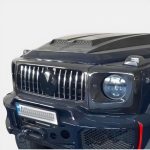
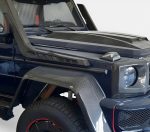
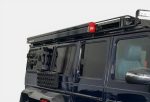
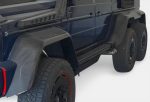
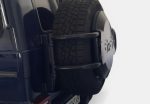
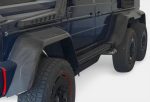


Exclusive Six-Wheel Limousine for the Modern G-Class
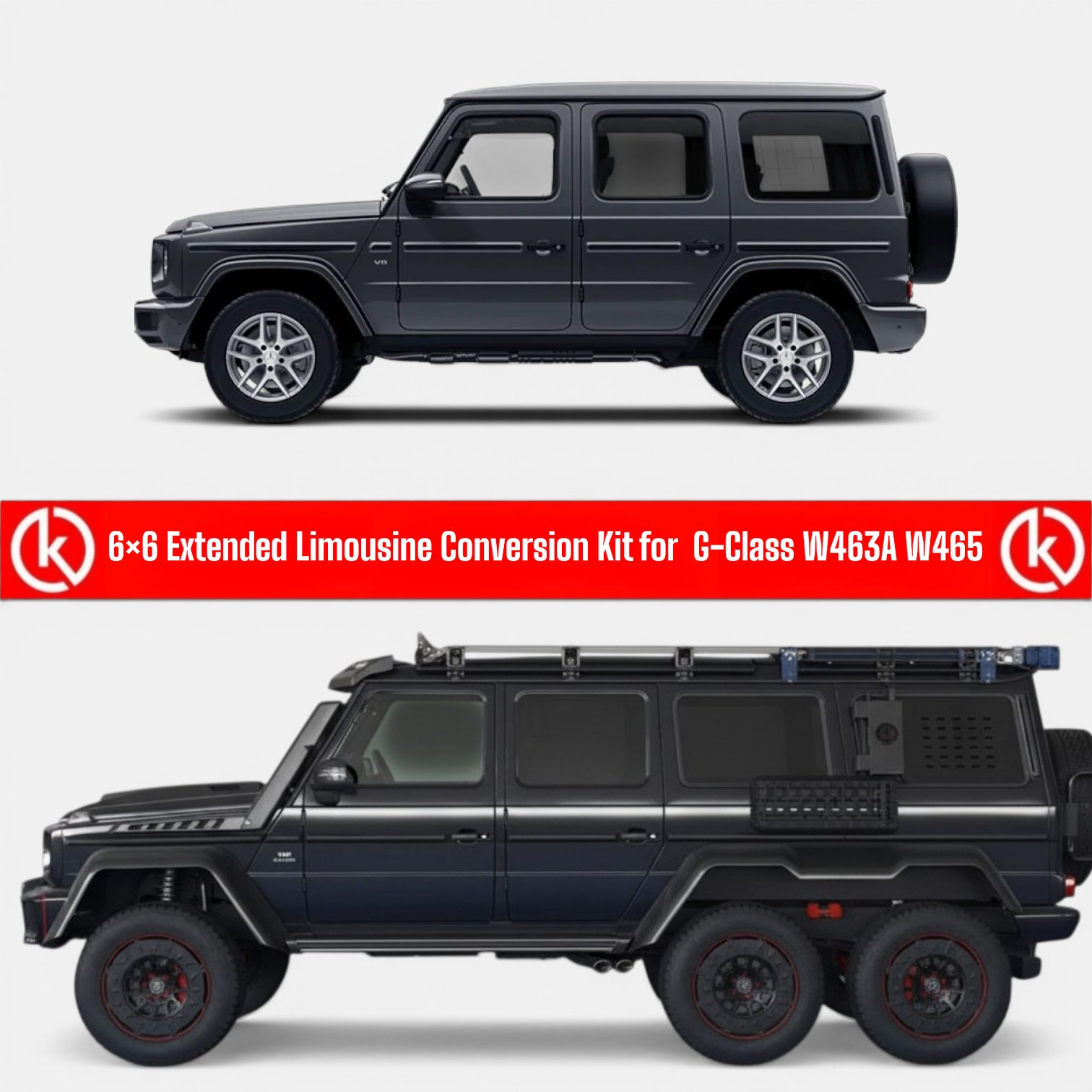
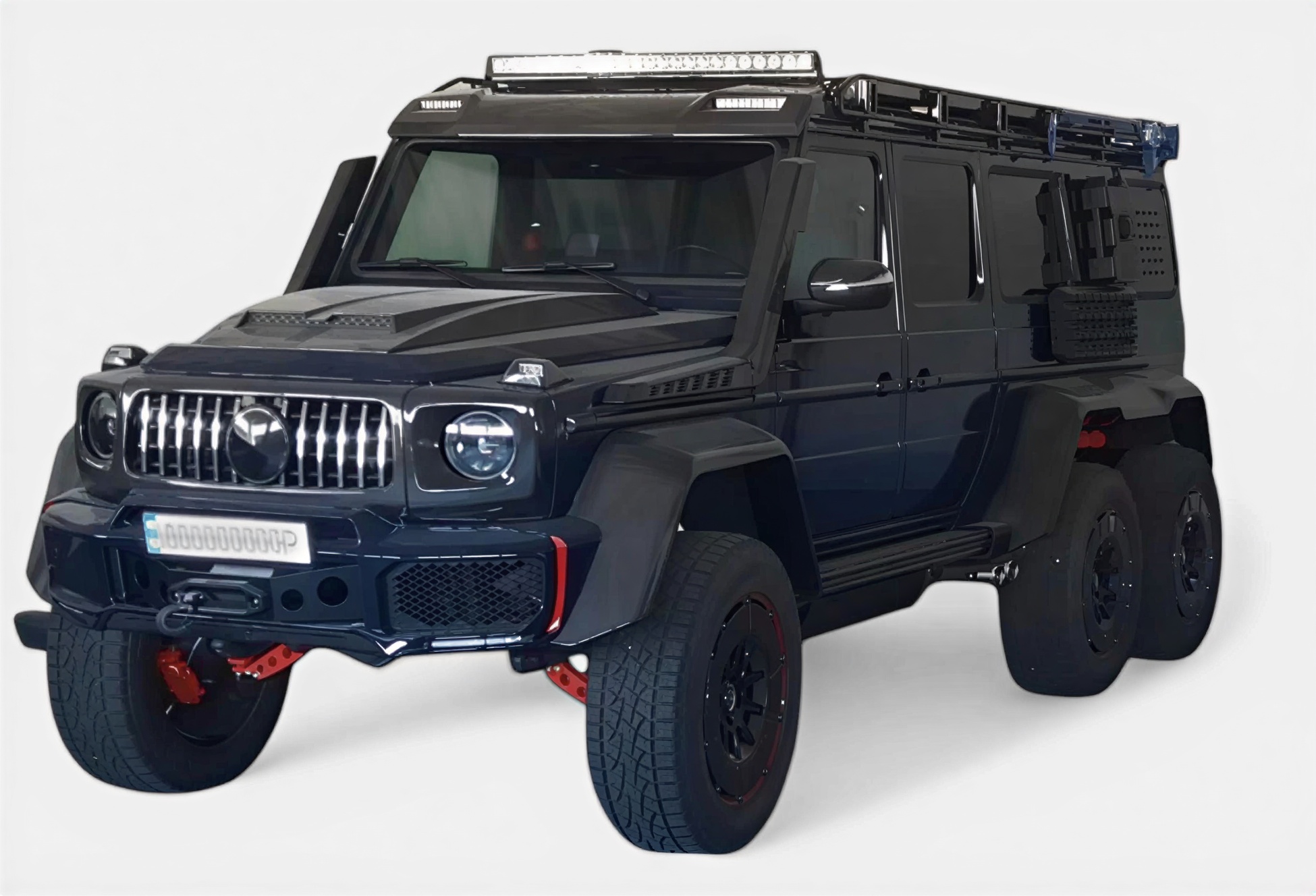
The Mercedes G-Class 6×6 limousine conversion transforms an eligible modern G-Class donor into an ultra-long, six-wheel luxury vehicle with a fully extended passenger cabin. Developed as a complete workshop project, the conversion combines a reinforced rear structure, an additional axle, bespoke body panels and an optional VIP interior configured around the client’s intended use.
This is not a conventional body-kit installation or a cosmetic axle display. The vehicle is re-engineered as an integrated project in which chassis geometry, body structure, drivetrain layout, suspension, braking, electrical systems and cabin design must be planned together. Kubay Design completes the build as a limited custom conversion rather than presenting it as a factory Mercedes-Benz model.
The finished vehicle is designed to create exceptional road presence and executive accommodation. Exact dimensions, seating capacity, equipment, materials and technical configuration are determined during project specification because each donor vehicle and client brief may differ.
Extended Body Architecture and Six-Wheel Layout
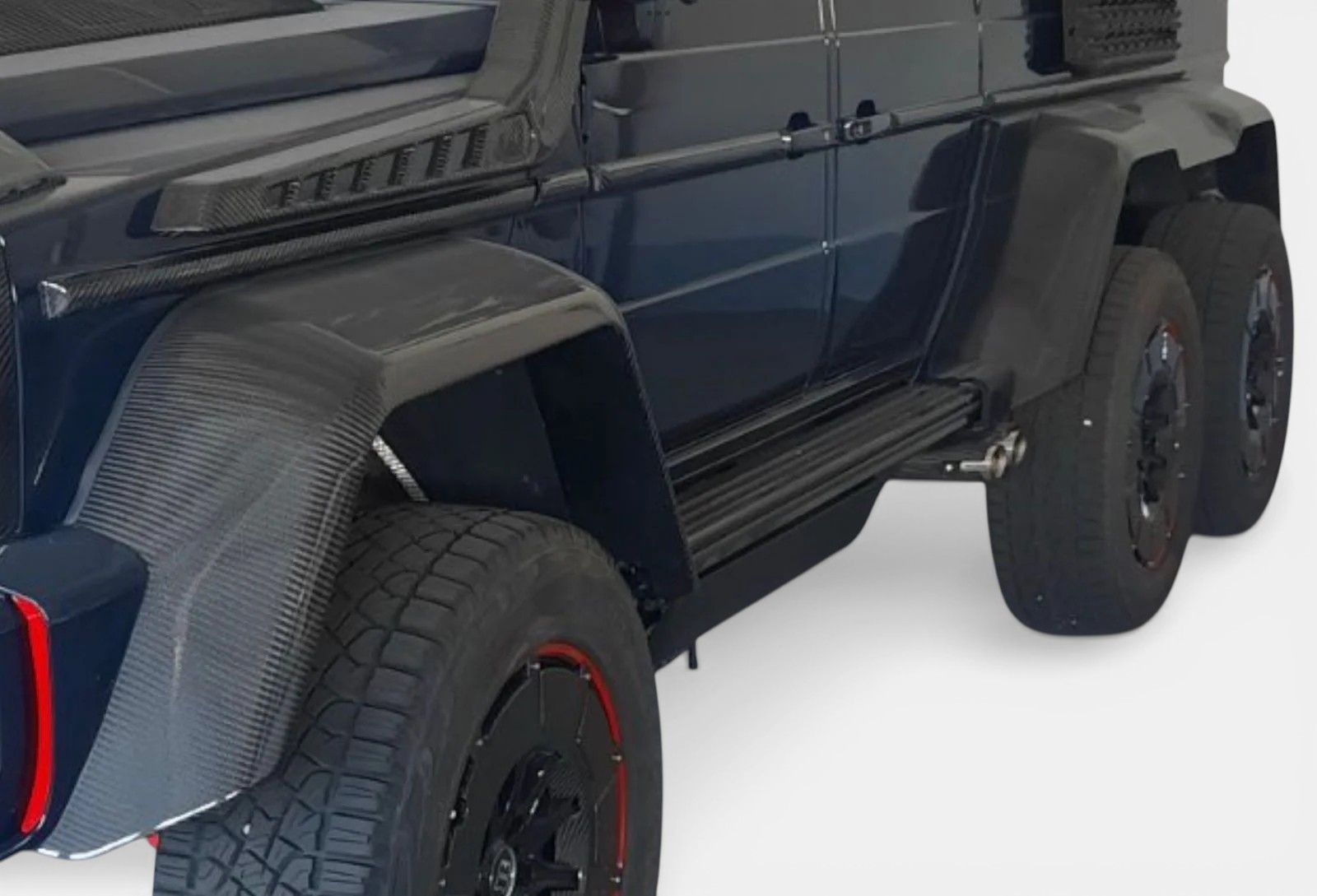
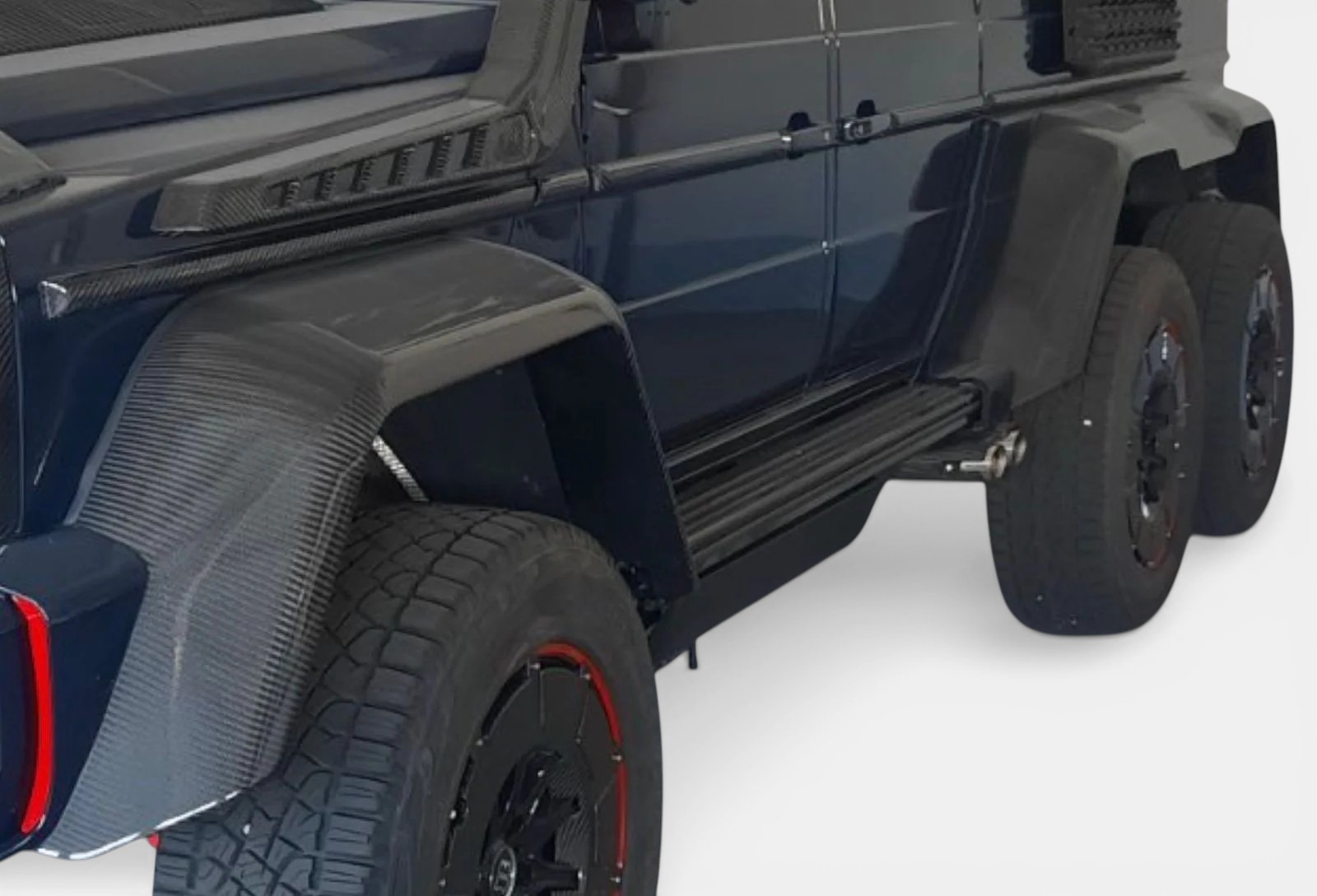
The conversion substantially extends the original body and rear chassis to accommodate a third axle and a limousine-style passenger compartment. The extended proportions are coordinated with widebody exterior elements so the additional length and wheel position form one coherent design rather than appearing as separate modifications.
Reinforced Chassis Extension
The listed service includes a rear chassis extension and structural components for the six-wheel layout. Before fabrication, the donor must be inspected for previous collision repairs, corrosion, deformation and non-standard modifications. Original reference points should be measured and documented before any structural work begins.
Frame alignment, reinforcement strategy, welding procedures and corrosion protection depend on the confirmed donor specification and final vehicle design. The product page does not publish steel grades, section dimensions, welding maps, maximum authorised mass or certified axle-load figures. These values must be established within the engineering scope for the individual project.
Additional Axle Integration
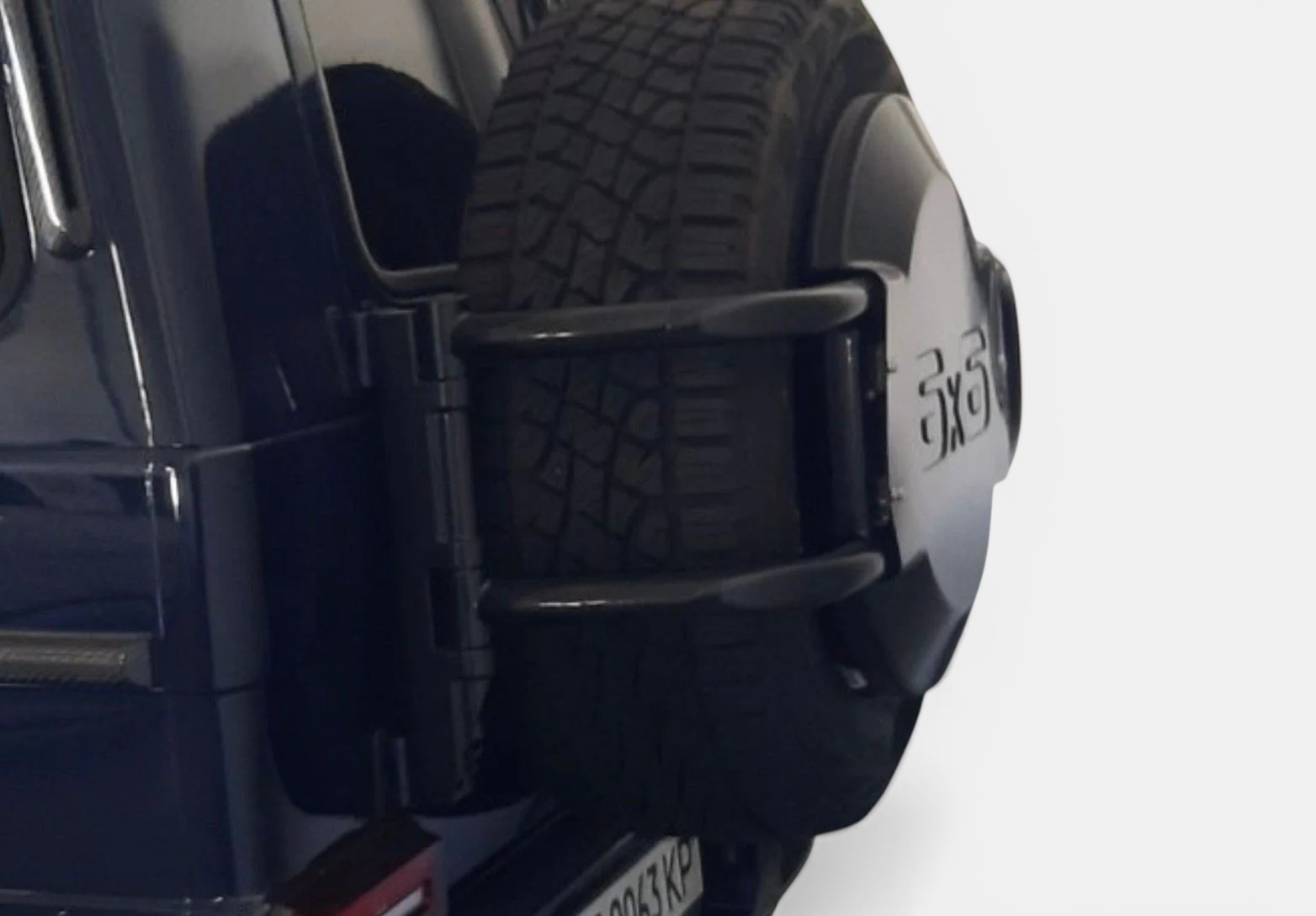
An additional axle is integrated into the extended chassis to create the 6×6 configuration. Axle position affects wheelbase, turning behaviour, driveline angles, suspension geometry, brake balance and body clearance. The final arrangement must therefore be designed around the engine, transmission, transfer system, wheel package and intended operating conditions.
The current page does not specify the axle manufacturer, portal ratio, differential type, steering arrangement, tyre size or suspension design. These details should be documented in the final technical proposal rather than inferred from photographs of a completed vehicle.
Luxury Limousine Cabin Designed Around the Client
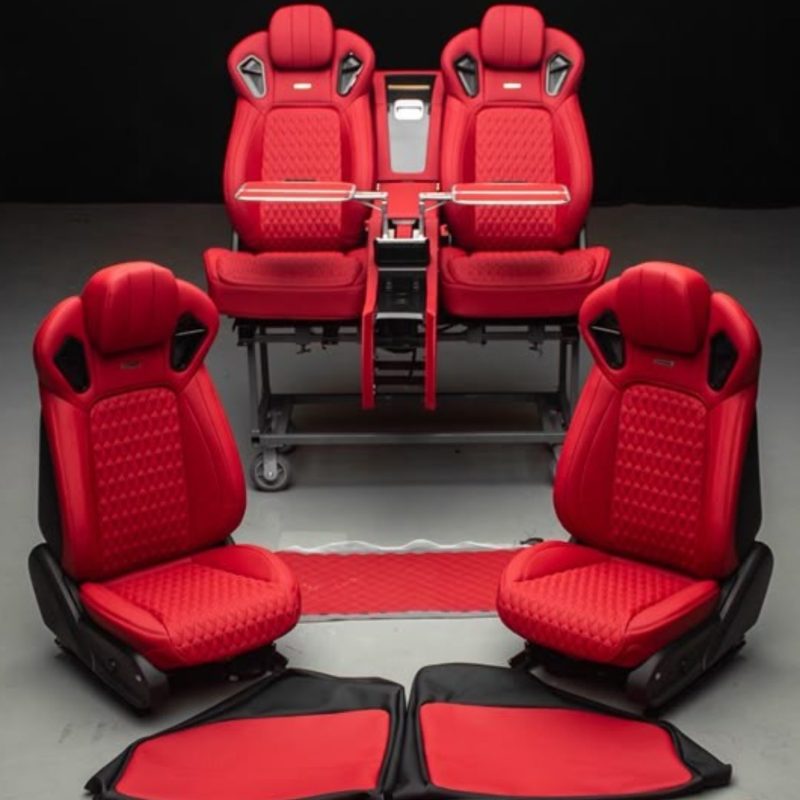
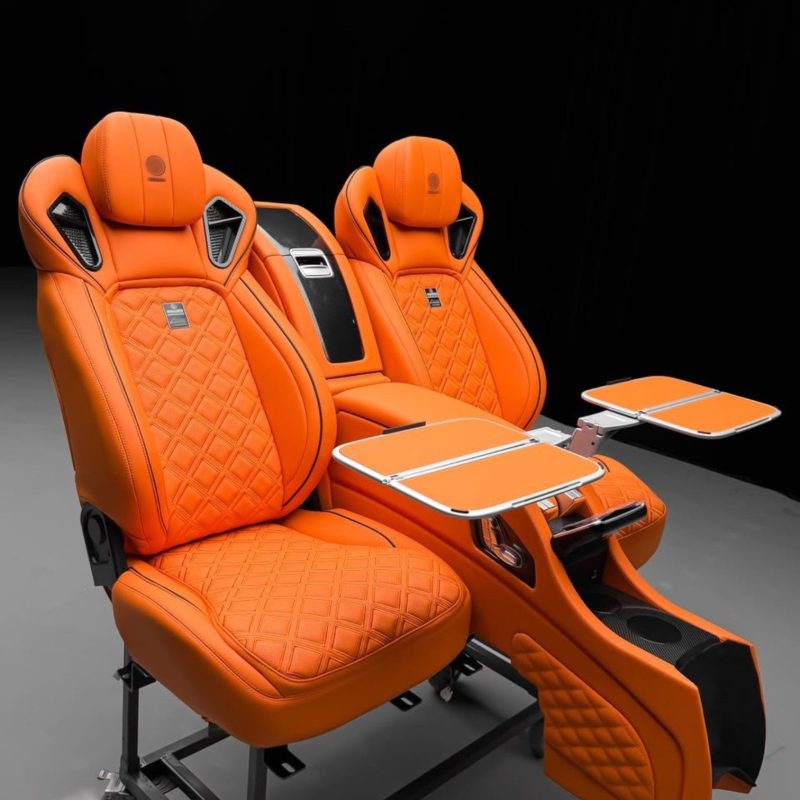
The optional G-Class VIP limousine interior can be developed as a private lounge with seating, a passenger partition, ambient lighting and selected luxury materials. The cabin layout is configured with the client so that passenger capacity, legroom, storage, controls and visual details correspond to the intended private, executive or presentation use.
VIP Seating and Lounge Configuration
Possible interior planning may include individually positioned VIP seats, a coordinated rear lounge arrangement or another layout agreed during design development. Seat dimensions, electric functions, massage, heating, ventilation, restraint systems and certified mounting structures are not listed as standard features on the current page and must be confirmed separately.
The interior concept should preserve safe access, emergency exit routes and correct operation of seat belts, airbags, occupancy sensors and electrical equipment where applicable. Any partition must be designed around cabin clearances, visibility requirements and the final seating arrangement.
Materials, Lighting and Personalisation
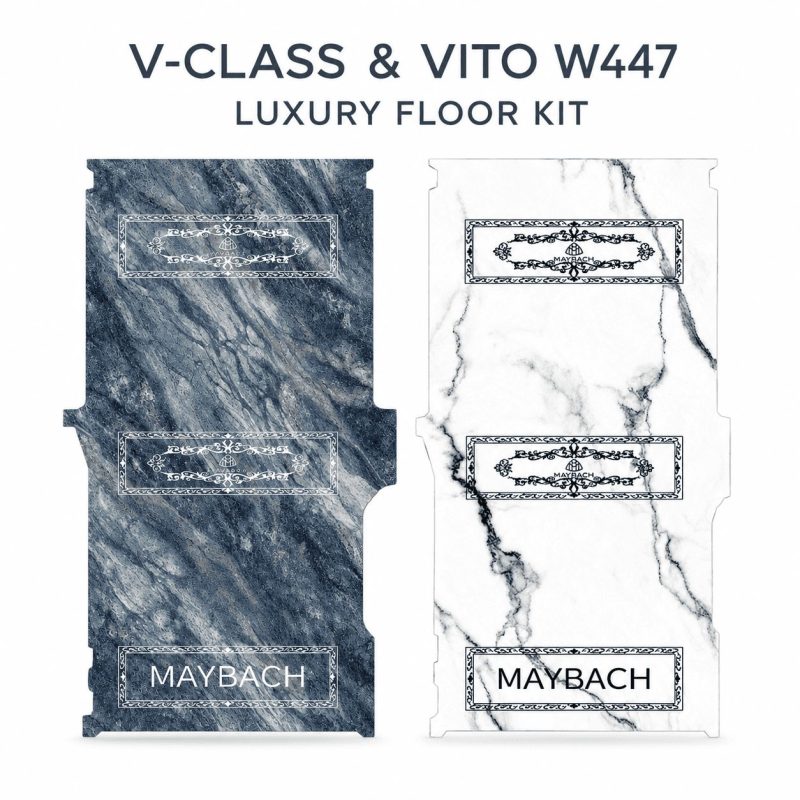
Upholstery colours, stitching, trim surfaces, ambient-lighting design and decorative finishes can be selected through the project specification. Material brands, leather grades, veneer types, carbon-fibre elements, multimedia equipment and refrigeration systems are not defined in the standard description and should not be treated as included unless stated in the signed quotation.
A complete interior proposal should identify every visible surface and functional component before production. This prevents inconsistent finishes and allows the exterior colour, cabin palette, metal details and lighting temperature to be developed as one restrained luxury composition.
Exterior Design With Extended Widebody Proportions
The W463A extended limousine concept uses custom rear panels and widebody detailing to integrate the longer cabin and third axle with the original G-Class design language. The objective is a balanced silhouette with clear wheel positioning, consistent shoulder lines and professionally finished transitions between original and newly manufactured sections.
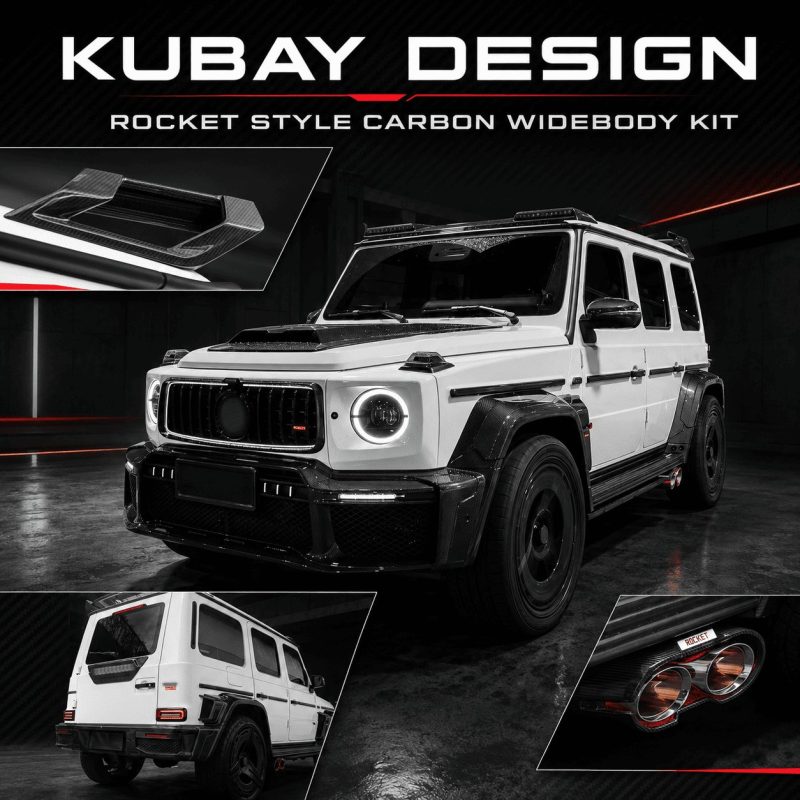
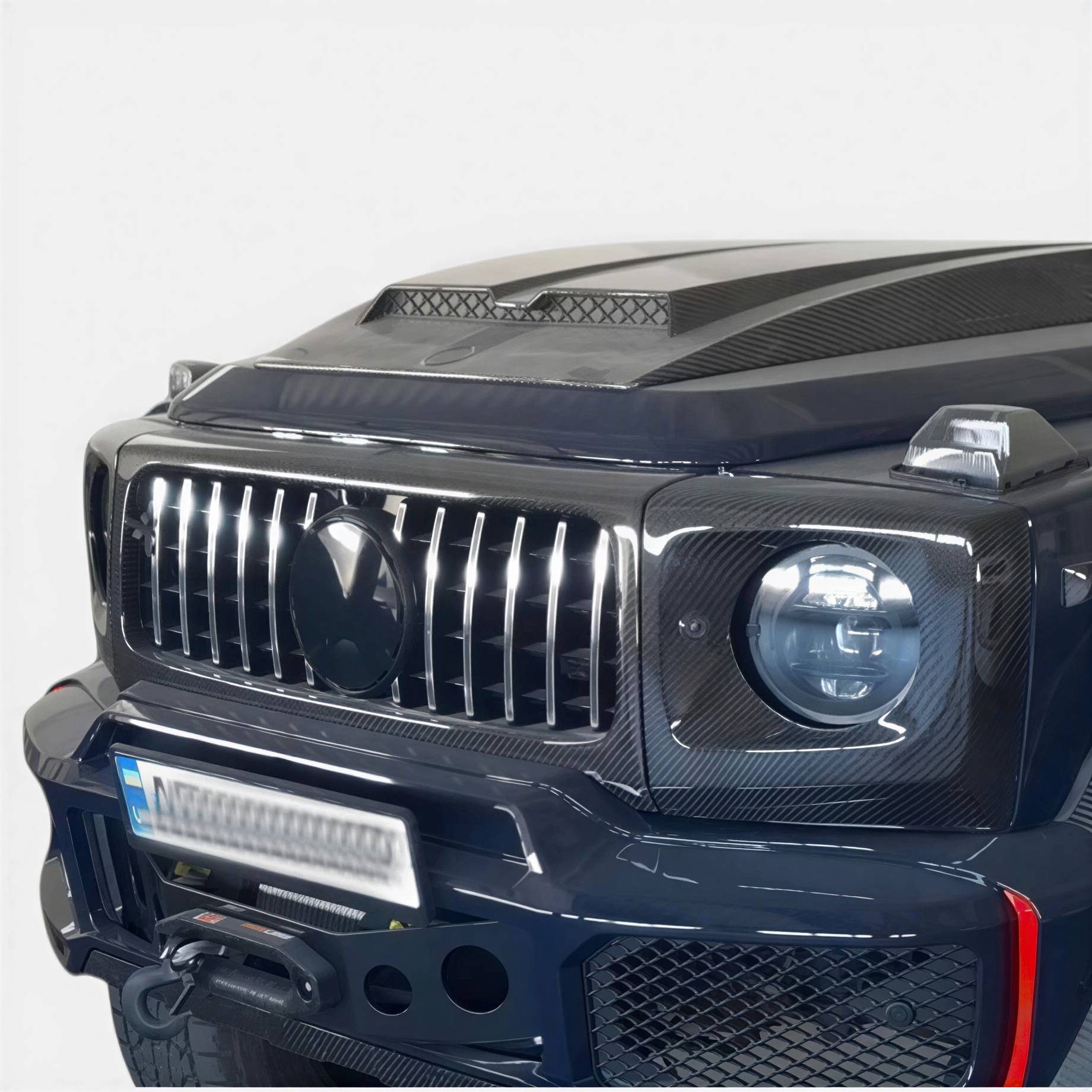
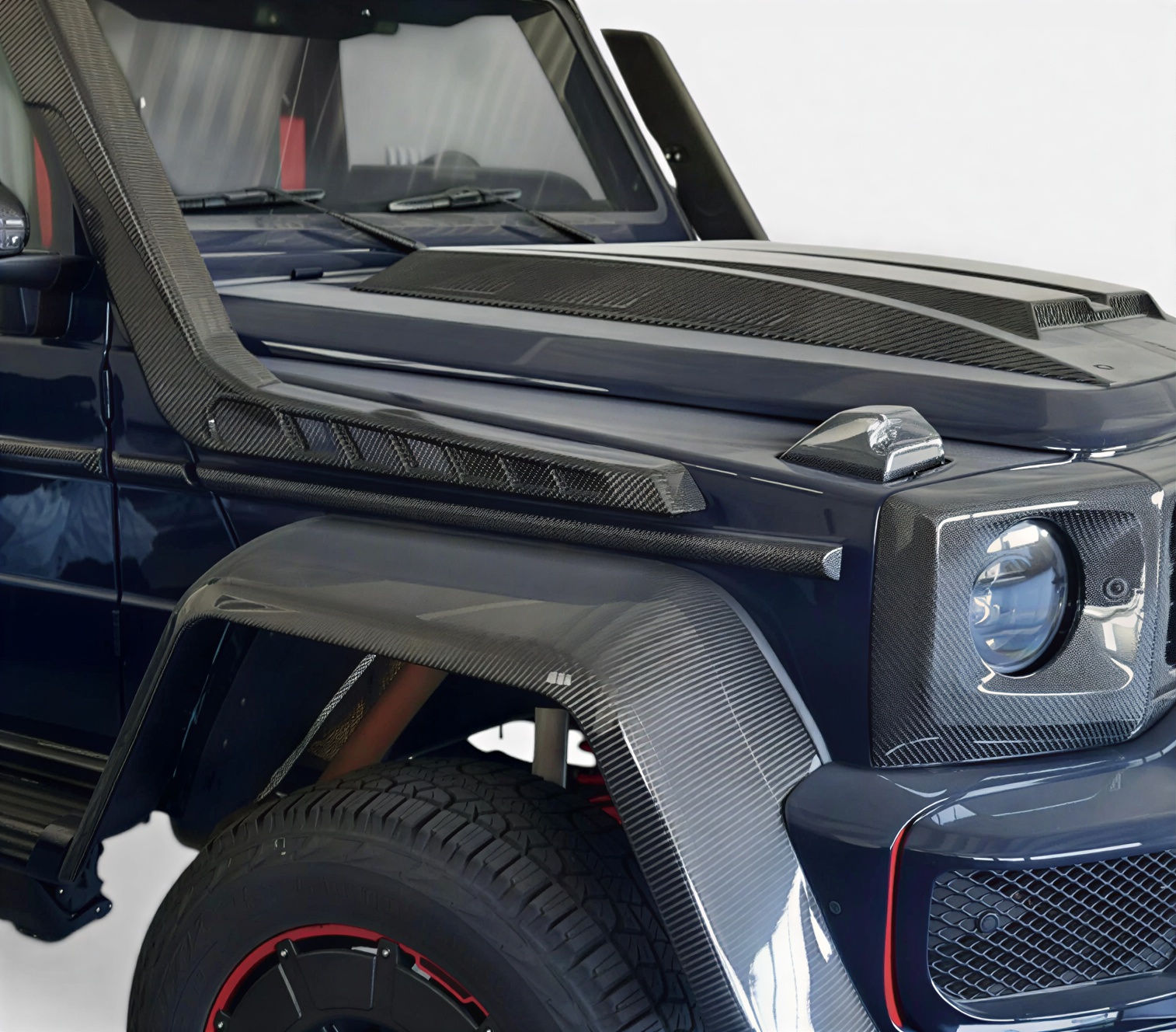
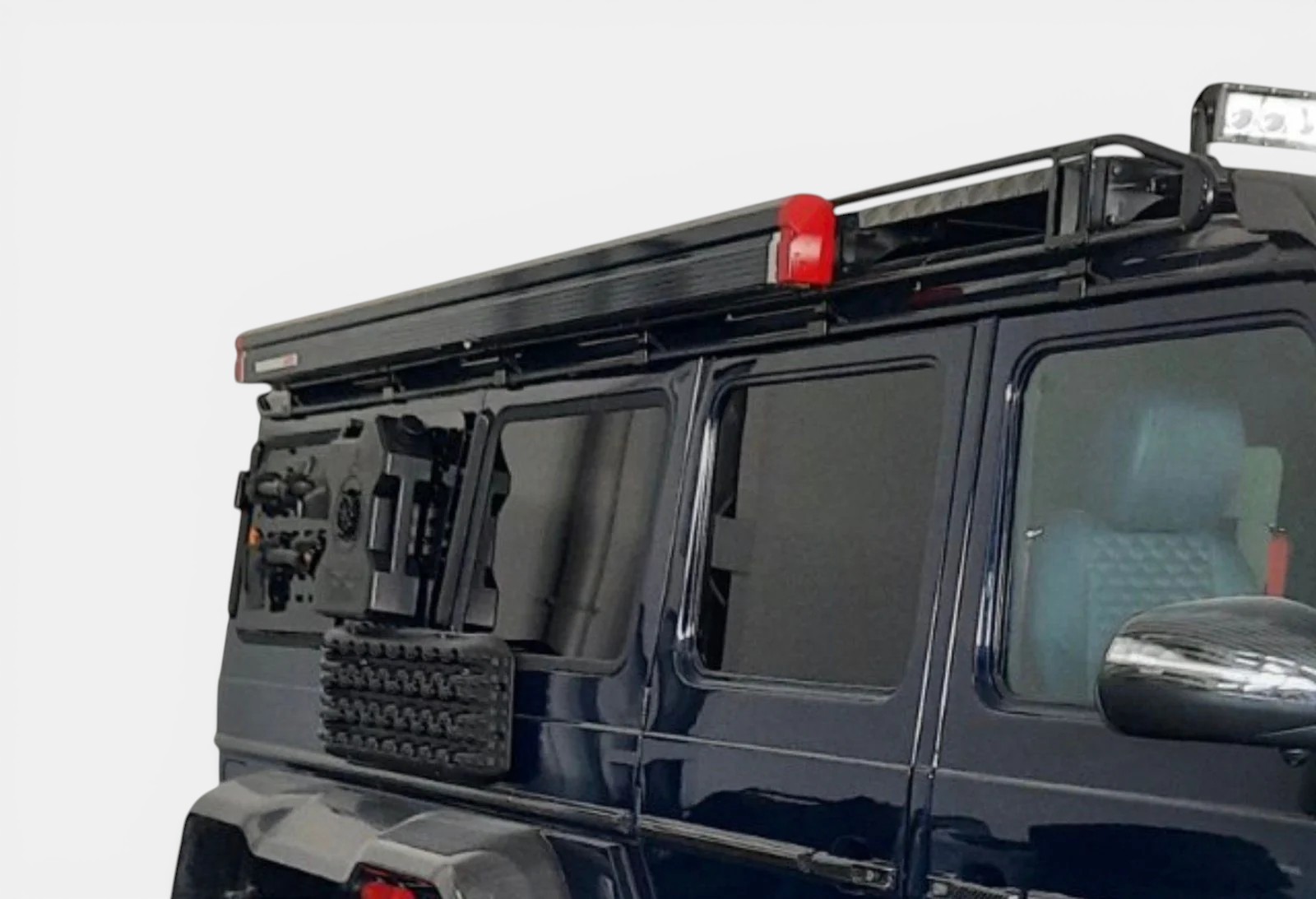
Exact exterior content depends on the approved renderings and project agreement. Bumpers, fender flares, side steps, roof elements, lighting, wheels, exhaust details and carbon components should be listed individually in the final specification. Items visible in reference photographs are not automatically included.
Custom Panels and Surface Finishing
Extended body panels require repeated trial fitting before primer, paint and final assembly. Door openings, roof joints, glazing areas, wheel arches and lower trim interfaces must be checked for symmetry and consistent gaps. Surface preparation should begin only after structural alignment and functional testing have been approved.
Paint matching should be based on the actual donor vehicle rather than the factory colour code alone, because age and previous repairs can affect the visible shade. Gloss-black, body-colour, satin and carbon-fibre details require separate preparation processes and should be confirmed before finishing.
W463A and W465 Donor Vehicle Compatibility
The service is listed for modern Mercedes-Benz G-Class vehicles identified on the page as W463A and W465. In the tuning market, W463A commonly refers to the redesigned G-Class introduced for 2018, while Mercedes-Benz documentation identifies the later updated vehicle as model series 465. These versions share the modern G-Class concept but can differ in exterior panels, electronics, assistance systems, dashboard equipment and model-specific hardware.
Verify the VIN and Production Specification
Before approving a W465 6×6 conversion, Kubay Design requires the VIN, production date, exact model, engine, transmission, sales market and left- or right-hand-drive configuration. Photographs of the chassis, suspension, brakes, underbody, exterior and cabin are also necessary for preliminary evaluation.
A registration year alone is not sufficient because production dates and market introductions may overlap. Vehicles with previous body conversions, collision repairs, suspension modifications or non-standard electronics require additional inspection before the project scope can be confirmed.
Not Compatible With the Earlier W463 by Assumption
The earlier W463 generation produced before the major 2018 redesign uses different body construction, frame geometry, front suspension, cabin architecture and electronic systems. Components and fabrication references developed for W463A or W465 must not be assumed to suit the earlier platform.
The modern generation can be recognised visually by its broader body, revised LED headlamps and fully redesigned cabin, but appearance is not a reliable identification method when a vehicle has already received facelift parts. VIN data and physical chassis inspection remain essential.
Professional Workshop Build and Project Management
The listed package includes professional assembly and finishing. A project of this scale requires coordinated work across structural fabrication, drivetrain installation, body manufacturing, paint, upholstery, electronics and final testing. Each phase should be documented so that later stages do not conceal unresolved structural or mechanical issues.
Pre-Production Design and Approval
The process should begin with the donor review, client brief and definition of the intended result. Exterior proportions, door arrangement, glazing, seating layout, colours and principal equipment can then be documented through drawings, renderings or an agreed project specification.
Changes requested after structural or interior production begins may affect cost and completion time. The final contract should therefore identify the included work, optional features, client-supplied components, approval stages and payment schedule before fabrication starts.
Mechanical and Electrical Integration
Extending the body and adding an axle can affect brake hydraulics, ABS signals, stability systems, tyre-pressure monitoring, fuel and exhaust routing, wiring harnesses and driver-assistance equipment. Every transferred or adapted system must be inspected and tested before the vehicle is released.
The page does not claim that all original electronic functions remain unchanged or that every market-specific feature can be transferred without adaptation. Calibration, coding or replacement hardware may be required according to the donor specification and completed design.
Testing, Legal Approval and Registration
A Mercedes 6×6 custom build changes fundamental vehicle characteristics, including length, axle count, mass distribution and body structure. Registration and approval requirements vary by destination country and may cover braking, lighting, dimensions, emissions, noise, passenger restraints, glazing, axle loads and maximum authorised mass.
The client should establish the required legal pathway before production begins. Kubay Design can define the workshop scope, but the available product page does not state that a universal homologation certificate, registration approval or country-specific engineering report is included.
Final Inspection Before Delivery
After assembly, the vehicle should undergo dimensional checks, wheel alignment, brake testing, driveline inspection, steering evaluation, electrical diagnostics and controlled road testing by qualified professionals. Doors, tailgate, seats, partition systems, lighting and passenger controls should be checked individually.
Off-road capability, payload, towing capacity, top speed, turning circle and certified passenger capacity cannot be inferred from the six-wheel appearance. These values require engineering confirmation and, where applicable, approval testing for the completed vehicle.
Package Scope Confirmed on the Product Page
The current service description lists the following principal work:
- Complete extended limousine exterior conversion
- Rear chassis extension and 6×6 modification
- Additional axle integration
- Extended body panels and structural components
- Optional full VIP interior configured with the client
- Professional assembly and finishing
The word “complete” applies to the confirmed project specification, not to every accessory visible in photographs. Wheels, tyres, suspension hardware, portal systems, brakes, glazing, multimedia, exterior carbon parts, paint choices and interior equipment must be itemised in the final quotation if they are required.
Estimated Production Schedule
The page states an estimated completion time of four to five months. This should be treated as a project estimate rather than a guaranteed delivery date. Timing may depend on donor condition, final engineering, material selection, optional interior complexity, component availability, approval changes and the speed of client decisions.
The production schedule should begin only after the donor vehicle, deposit, technical specification and design approvals have been received according to the agreed contract. International vehicle transport, customs procedures and registration work may add time outside the workshop production period.
Kubay Design Workshop in Chełm, Poland
The conversion is presented as a Kubay Design workshop build in Chełm, Poland. Because the product description and the website footer currently display different street numbers for the European workshop, the exact delivery and collection address should be confirmed directly before transporting the donor vehicle.
Vehicle handover arrangements, transport insurance, customs status and responsibility for temporary registration should be agreed in writing. A donor vehicle should not be dispatched until Kubay Design has issued the confirmed workshop instructions.
Plan Your G-Class Six-Wheel Project
Explore the W463A G-Class 6×6 collection and the G-Class W465 category for related conversion components. Interior options can be reviewed in the W463A interior section and the W465 interior section.
For alternative six-wheel formats, compare the XLP-style W463A 6×6 conversion kit and the W463A/W465 6×6 conversion. Visit the Kubay Design shop, review completed work in Our Projects, or learn more About Kubay Design.
Before placing an order, review the Payment Rules, Shipping Policy and Refund Policy. Send the VIN, donor photographs, intended destination, interior brief and exterior preferences through Contact Us to request a project review and a written specification.